
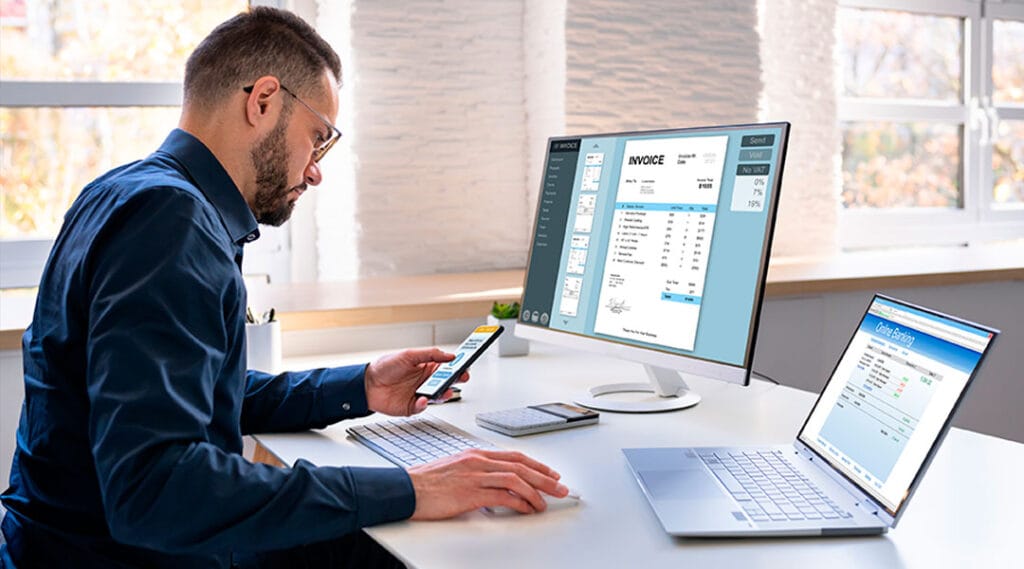
Reverse factoring is a buyer-led program that lets suppliers get paid early on approved invoices. The buyer confirms what it owes, the supplier chooses whether to take early payment from a finance provider for a fee, and the buyer pays the provider on the agreed due date. It’s also called payables finance or approved payables finance.
Suppose you run a food distribution company. You pay suppliers in 60 days, but the company that makes your cartons needs to buy paperboard next week. Once you approve its invoice for the last shipment, your supplier can decide whether getting paid early is worth the fee. You still pay on day 60.
How Does Reverse Factoring Work?
In a reverse factoring transaction, three parties are involved.
- Buyer. Your distribution company sets up the program and approves invoices for payment.
- Supplier. The carton maker chooses whether to get paid early on an approved invoice.
- Factor or funder. A bank or factoring company pays the carton maker early and collects from your company on the due date.
Here’s how an invoice moves through the program.
- You set up the program with a funder. The funder reviews your company’s credit and works with you to set a funding limit and terms for your suppliers.
- You approve the supplier’s invoice. The carton maker delivers the cartons and sends its invoice as usual. You check it against the order, then confirm the amount and due date with the funder.
- The supplier decides whether to get paid early. The carton maker can wait until day 60 for the full payment or accept the funder’s offer. Before deciding, it can check the fee, how much cash it would receive now, and when it would receive any remaining balance.
- You pay on the agreed date. If the carton maker accepted early payment, you pay the funder on day 60. If the funder advanced only part of the invoice, it pays the carton maker the remaining balance according to the program terms.
How quickly you approve invoices matters to your suppliers. On a 60-day invoice, approval on day 5 gives the carton maker the option to collect up to 55 days early. Approval on day 40 leaves just 20 days. If the paperboard order is due next week, your approval timing can determine whether the supplier has cash in time to place it.
A reverse factoring example on a $100,000 invoice
Suppose the carton maker invoices your company for $100,000, due in 60 days. You approve it on day 5. The funder offers a 90% advance and charges a flat fee of 1.5% of the invoice value, deducted from the final payment. These figures illustrate one possible offer.
| When | What changes hands |
| Day 5 | The provider sends the supplier $90,000. |
| Day 60 | The distributor pays the factor $100,000. The factor sends the supplier the $10,000 balance less the $1,500 fee, or $8,500. |
| Result | The supplier collects $98,500. It paid $1,500 to access $90,000 of its invoice 55 days early. |
That split is one possible arrangement. Another provider may offer a single early payment equal to the invoice value less a discount. When comparing offers, put the dollar amounts and payment dates side by side.
When is the Right Time to Use Reverse Factoring?
- It’s a financial tool that can be advantageous when suppliers stand to gain significantly from immediate payments, either to improve their cash flow or to seize growth opportunities.
- Buyers can also consider implementing it when the company is presented with a high-growth opportunity and needs to free up cash for strategic investments when traditional funding sources are not an option, as it serves as a financial lifeline that allows businesses to maintain their financial stability.
- The buyer has a more robust credit rating than its suppliers.
In essence, the right time to use reverse factoring is when it aligns with a company’s strategic goals, helps improve its financial stability, and creates a win-win scenario for both the buyer and its suppliers.
What Does Reverse Factoring Cost, and Who Pays?
The supplier typically pays a fee on the invoices it chooses to collect early. The buyer’s creditworthiness matters because the funder relies on the buyer to pay the approved invoice. A supplier whose customer has a stronger credit profile may get better financing terms through the program than it could obtain on its own. The number of days financed and the volume of invoices can also affect pricing.
If you’re the supplier, ask for a quote on one of your invoices. A percentage alone tells you little. Is it a flat fee, a monthly fee, or an annual rate applied to the days financed? Does it apply to the full invoice or only to the advance? Ask the funder to show the dollar amount you’ll receive on each payment date. That makes offers easier to compare, especially when one pays the full invoice less a discount and another holds back a balance.
If you’re the buyer, ask which costs your company would cover. Confirm any setup or ongoing fees, then give suppliers a sample offer before inviting them to join. A program works only if the price and timing make sense to the businesses you want to use it.
Reverse Factoring Vs. Traditional Factoring and Dynamic Discounting
The word reverse refers to who starts the arrangement. In traditional invoice factoring, a supplier approaches a factor about its unpaid invoices. In reverse factoring, the buyer sets up a program for its suppliers. Dynamic discounting gives buyers a third option when they have cash available to pay early themselves.
| Option | Who arranges and funds early payment? | When it may fit |
| Reverse factoring | The buyer sets up the program. A third-party funder pays suppliers on buyer-approved invoices. | A buyer wants to offer suppliers early payment while keeping its agreed payment schedule. |
| Traditional invoice factoring | The supplier sells eligible customer invoices to a factor. | A supplier wants to finance invoices across several customers or has a customer without a reverse factoring program. |
| Dynamic discounting | The buyer uses its own cash to pay early in exchange for an early payment discount. The discount can vary with the payment date. | A buyer has cash available and wants to earn a discount by paying suppliers sooner. |
If you’re a supplier looking for funding across several accounts, see how invoice factoring works.
What Are the Benefits and Risks of Reverse Factoring?https://summar.com/what-invoice-factoring-is-and-how-it-works/
For buyers
The clearest benefit is being able to help a supplier fill your next order while keeping cash available until your invoice comes due. If packaging is the last thing you need before a product can ship, an earlier payment to your carton supplier can matter more than its share of your purchasing budget suggests. See how supplier cash flow can affect your deliveries.
A program can support your existing payment terms. Extending those terms is a separate decision. If you move a supplier from net 30 to net 60, it may now have to pay a fee just to collect on its former schedule. Your days payable outstanding (DPO), the average time you take to pay suppliers, may improve while the offer becomes less attractive to the supplier. Discuss any change in terms before rollout.
For suppliers
Early payment gives you more control over working capital. You might use it during a busy month to buy materials or cover payroll, then collect the full invoice amount at maturity when cash is less tight. Receiving cash sooner can shorten the collection portion of your cash conversion cycle, often tracked through days sales outstanding (DSO).
Before you count on those funds, check three things.
- What happens if the buyer fails to pay or disputes the invoice? Ask which risks the funder takes and when it could require you to return money. An agreement may cover buyer credit risk while still holding you responsible for an invalid invoice or a breach of your obligations.
- Has another lender already financed these receivables? If you have a factoring agreement or a credit line secured by customer invoices, check which invoices it covers and whether you need consent before enrolling.
- What if the funding limit changes? Work out how you would cover the next payroll or materials order if fewer invoices qualified for early payment. This matters most when one buyer accounts for a large share of your sales.
How Can You Tell Whether a Program Is a Good Fit?
Test the offer against one recent invoice. Use the date the buyer actually approved it and the date the supplier actually needed the cash. A 60-day payment term may look attractive on paper, but if approval came on day 40 and the supplier needed funds on day 30, the program would have been too late for that expense.
| If you’re the buyer | If you’re the supplier |
| Does the funding limit cover the invoices your suppliers want paid early, including during your busiest month? | After fees, how much cash will reach your account, on what date, and when will you receive any remaining balance? |
| Can your accounts payable team approve invoices consistently and resolve discrepancies before funding is needed? | How does the total fee compare with using your credit line for the same amount and number of days? |
| If you buy internationally, can the funder pay your suppliers in the countries and currencies they use? | Who covers any transfer or currency conversion costs, and what happens if the buyer disputes the invoice? |
What Should Buyers Check Before Setting Up a Reverse Factoring Program?
Start with the payment terms your suppliers will actually receive. If you buy across borders, ask the funder which countries and currencies it supports. Confirm the currency your supplier will receive, who covers any conversion or transfer fees, and when the funds will reach the supplier’s account. Those details help a supplier decide whether early payment is worth the cost.
Bring your finance team in before launch, too. Reporting requirements depend on the accounting standards your company follows. Under IFRS Accounting Standards, disclosures for qualifying arrangements include the terms, amounts owed, amounts suppliers have already received from funders, and ranges of payment due dates. Under U.S. GAAP, buyers with programs covered by ASC 405-50 report confirmed amounts still outstanding and provide additional annual disclosures. If you follow local standards, ask your accounting team what records you’ll need from the funder.
Frequently Asked Questions of reverse Factoring
Is reverse factoring the same as supply chain finance?
Reverse factoring is one form of supply chain finance. Providers sometimes use the terms interchangeably, but supply chain finance covers several ways to fund trade between buyers and suppliers. If a provider calls its offer “supply chain finance,” ask what triggers payment. In reverse factoring, a third party can pay the supplier early once the buyer approves the invoice.
Who can qualify for reverse factoring?
The funder reviews the buyer’s credit, the volume of invoices it expects to finance, and which suppliers will participate. Requirements vary by provider. If you buy internationally, ask which supplier countries and payment currencies the program supports.
Can a supplier join the program and still wait for full payment?
Yes. In a typical payables finance program, a supplier can wait until the due date and collect the full approved amount. When enrolling, ask whether you select invoices individually or whether the program automatically funds eligible invoices under your instructions.
Can a supplier set up reverse factoring on its own?
The buyer needs to participate because it approves the invoices and agrees to pay the funder. If your customer has no program, you can ask whether it would consider one. If you need an option, you can arrange directly, traditional invoice factoring may be a better fit.
Could Reverse Factoring Work for Your Suppliers?
Would getting paid earlier help a key supplier fill your next order? Bring Summar one recent invoice, its approval date, and its due date. We’ll walk you through how much your supplier could receive, how soon, and at what cost. You can then decide together whether the offer makes sense.
Summar’s reverse factoring program is designed for buyers with annual revenue above USD 20 million. Funding lines range from USD 500,000 to USD 2 million, with supplier advances of up to 90% and factoring fees as low as 1%, subject to approval and program terms.
Talk with Summar about early payment for your suppliers.